
The History of The Brewery Tap
& Rayment's Brewery,
Furneux Pelham
For 127 years The Brewery Tap sold beer brewed sixty yards from its front door. This is the history of the brewery across the road, and of BBA, the beer people are still talking about forty years after the last pint was pulled.
The farmer who made his own bricks
William Rayment was a farmer before he was a brewer.
In 1851 he was working 590 acres around Furneux Pelham with 28 labourers, living at Furneux Pelham Hall, which he leased from the Calverts, a family of London brewers who had owned it since 1677. By 1855 the county directory listed him as a brewer too. Trade grew quickly enough that by 1859 he was planning a purpose-built brewery on a site by the crossroads at Barleycroft End.
He built it himself, more or less. Rayment started a brick, tile and drainpipe works to make the materials, and the brewery that opened in 1860 was built of brick baked in a local kiln. It drew its water not from the River Ash, which runs close by, but from its own well on the premises. It was this water, the village always claimed, that gave the beer its particular flavour.
He barely saw it working. Rayment had tuberculosis, and in the winter after the brewery opened he took a turn for the worse. He died at the Hall on 10 December 1861, aged 47.
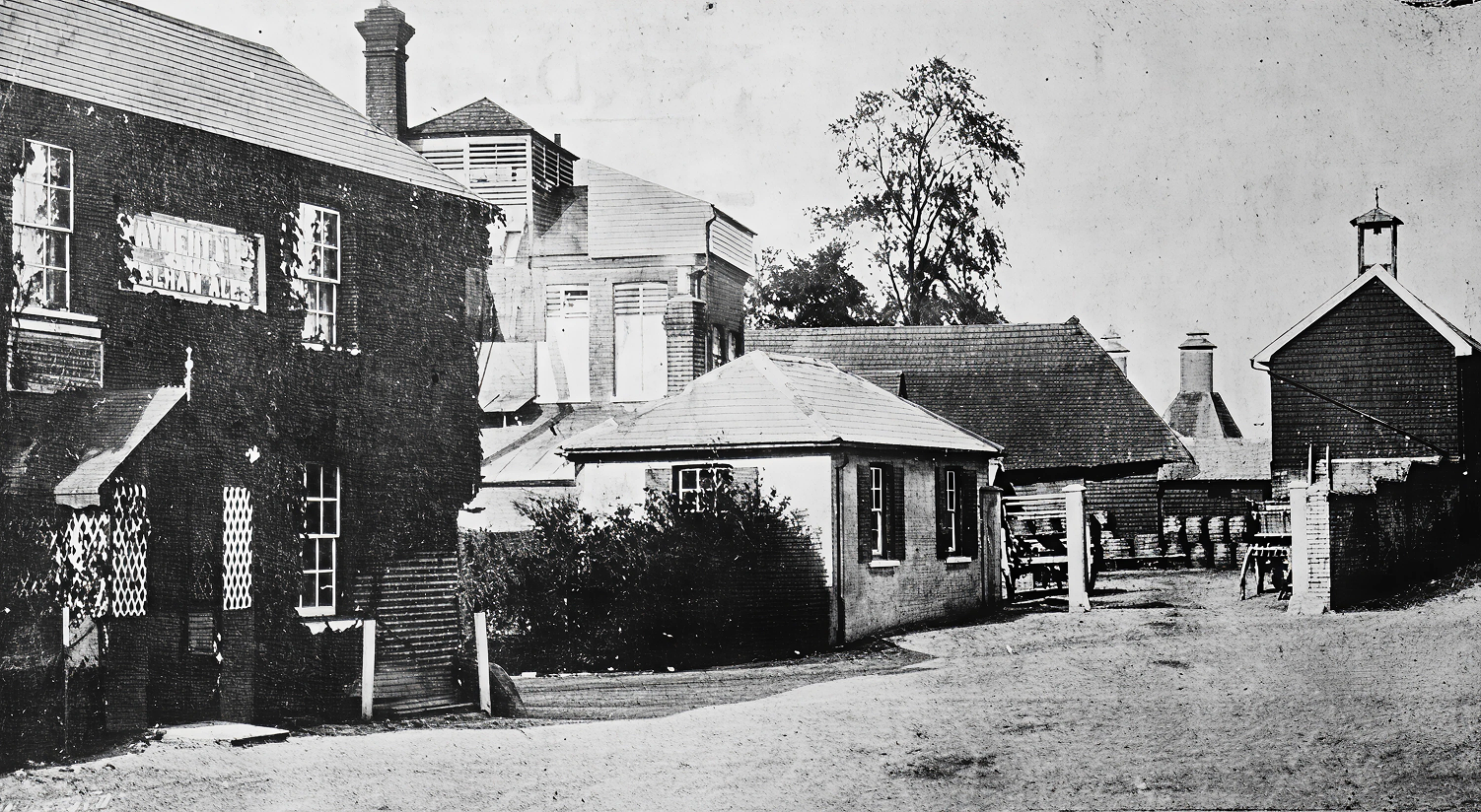
The oldest photograph of the brewery we've found. The brewhouse tower was then clad in timber; the lodge already stood at the gate. Undated, but before 1912.
A brewery tap is the pub attached to a brewery, where the beer is sold at source.
This one opened as a beerhouse directly opposite the works. Its first landlord on record, Joshua Godfrey, was also the brewery's engine driver: he spent his days at the steam engine and his evenings pulling what it had helped to brew. The two buildings are of a piece, brick and slate, plainly Victorian, and they were listed together, Grade II, on the same day in January 1985.
The brewery in those early years employed twelve to fourteen people, six or eight of them draymen, and brewed about 150 gallons at a time on three or four days a week. The malthouse went up in 1869. Later a gas engine generated electricity for the village as well as the brewery. In 1913 the thatched beer store caught fire and burned down.
The Tap
William Rayment's four sons all died young.
Edward in 1873, George in 1874 at 28, William Thomas in 1875 at 31, and Frank in February 1888 at 34. That December the brewery, with eighteen freehold pubs and one leasehold, went to auction in London. It was bought for £18,200 by Edward Lake and James King.
Both men were partners in Greene King, the Bury St Edmunds brewer, so the Herts and Essex Observer reported that Greene King had taken over the Pelham brewery. A week later it had to print a retraction. Lake and King had bought Rayment's as private individuals, and it would carry on under its own name, run as its own business. It did, for another 43 years. Rayment & Co only formally merged into Greene King in 1931.
The Observer's slip has proved durable. Local histories, guidebooks and the internet will tell you Greene King bought Rayment's in 1928. There is no record of anything happening in 1928. The dates in the brewery's own history are 1888, when two of Greene King's partners bought it for themselves, and 1931, when the company finally took it over.
The sons, the sale, and a mistake IN the local paper
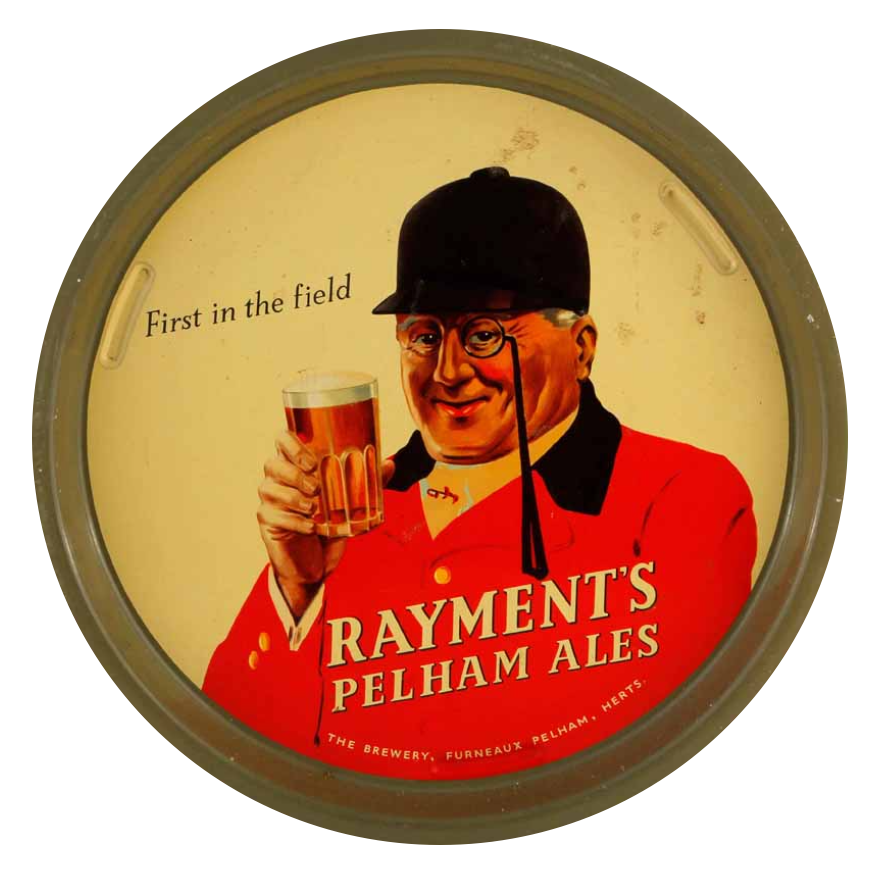
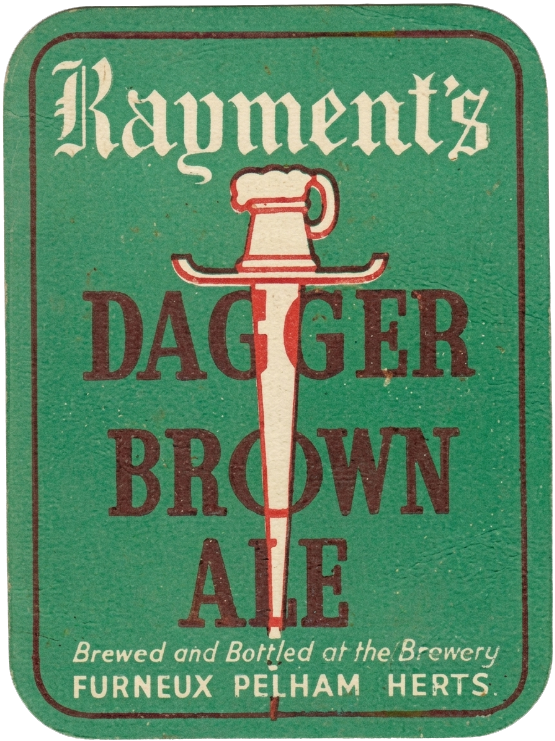
A Pelham Ales serving tray from the 1950s, spelt the old way, and a Dagger Brown Ale label. Rayment's kept its own name, and its own huntsman, for decades after Greene King's partners bought it.
THE CAPTAIN
Edward Lake, one of the two men who bought the brewery in 1888, put his family into it.
His son Alan Lake ran Rayment's from 1912 until his death in 1930. Another Lake, a vice-admiral, ran it from the merger in 1931. Then in 1937 came Captain Henry Neville Lake, a former submariner, who stayed in charge until his retirement in the late 1960s. Three Lakes at the helm across half a century is probably why Rayment's kept its own name so long after it had, on paper, become part of Greene King.
Rayment's was never big. Its strength was the clubs: 77 of them in 1937, 255 by the mid-1960s. Motor drays arrived in 1912 and bottling stopped in 1973. Over the years it brewed AK, a light mild the brewery said stood for "Ale for Keeping", a dark mild, Pelham Ale, Farm Stout, and a strong ale called Old Crony, trademarked in 1922.
The Captain is the man people remember. A map in his office is said to have tracked the county council's roadmenders. When a gang got near a Rayment's pub, he would drive out, meet them by happy accident, and stand them a pint in the bar. Shortly afterwards the pub's car park would have its potholes filled.
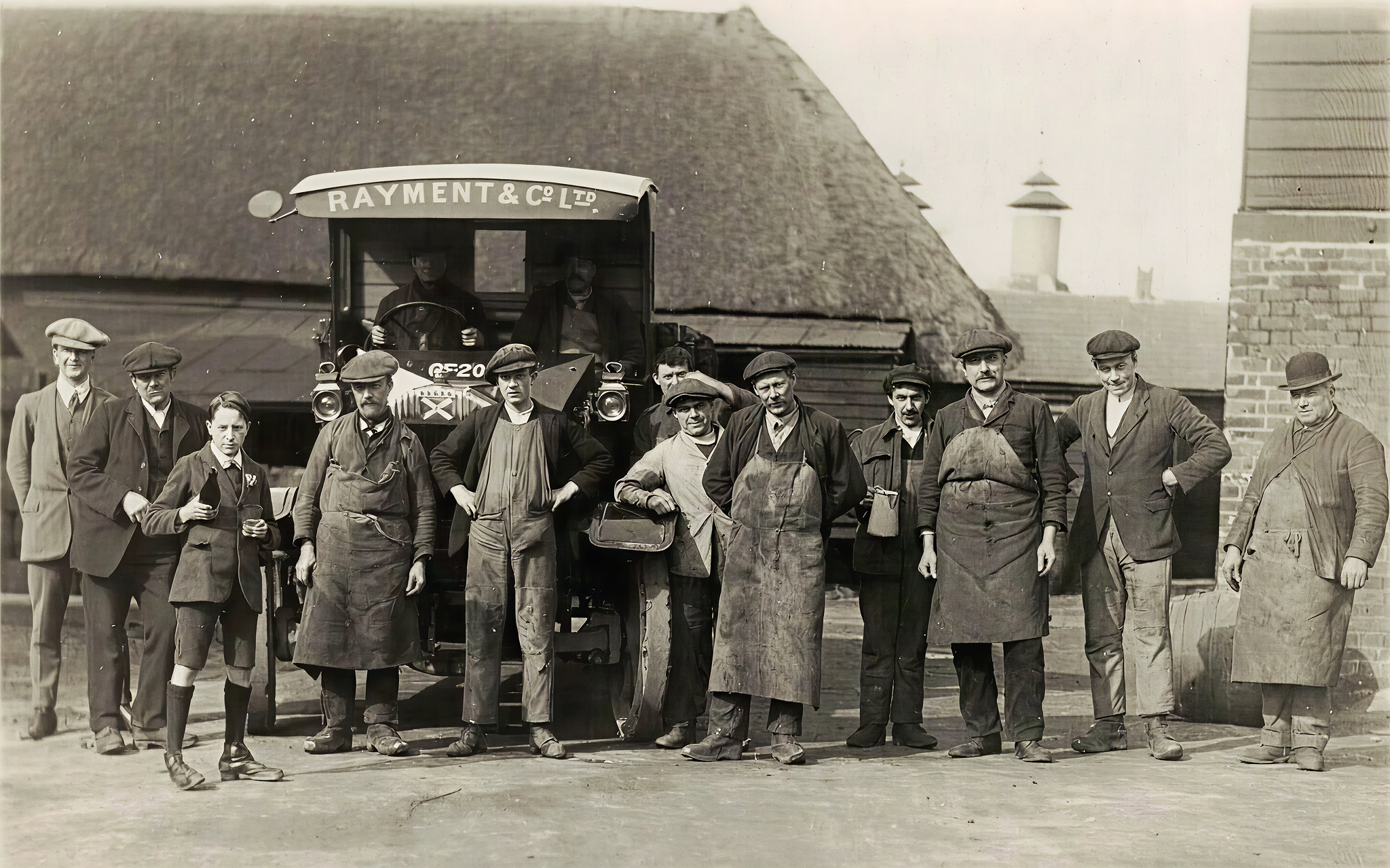
The men of Rayment & Co Ltd with one of the brewery's first motor lorries, some time after 1912. We don't know their names. If you do, tell us.
BBA
Everyone assumed the letters stood for best bitter. They didn't.
BBA was Best Burton Ale, a style older, sweeter and fuller than bitter, which most English brewers had long since given up. Rayment's kept brewing one in a Hertfordshire village until the 1980s, when the brewer eased the recipe towards a bitter by cutting the sugar. At an original gravity of 1036 it was a session beer, and a good one.
You could never buy it in a bottle. BBA was a pint or nothing, pulled in a Rayment's pub or a working men's club, and that is why it is remembered the way it is. Nobody could take one home. When the brewery went, so did every drop.
Martyn Cornell, now one of Britain's best-known beer historians, drank it as a teenager in Stevenage and calls it "the first great beer I drank, a marvellously balanced brew". In 1984, according to the local CAMRA branch, its members voted BBA one of the top four bitters in the country.
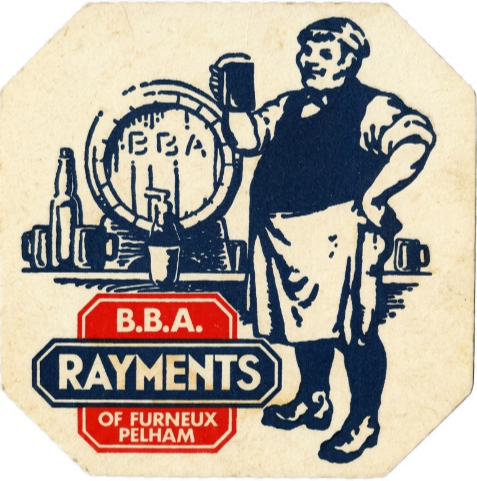
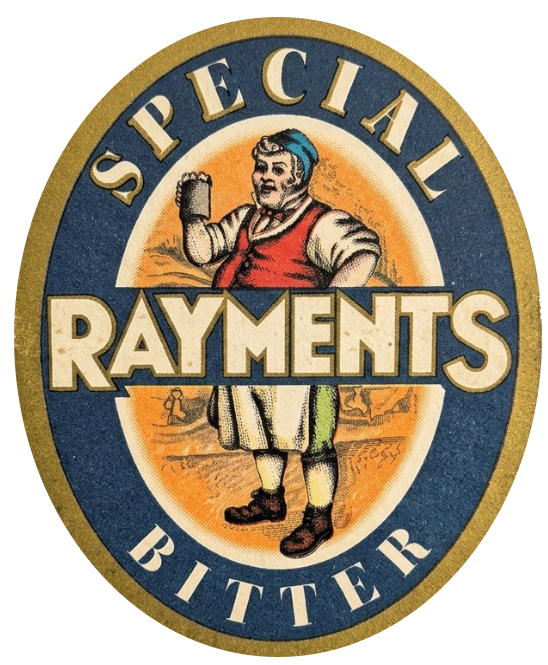
Rayment's beer mats from the brewery's last decades. The cellarman with his tankard was a stock figure that small brewers all over the country put on their mats and labels.
Three years before Greene King closed the brewery for being uneconomic, it was reporting rising sales and spare capacity.
That was November 1984, in the local CAMRA newsletter. At the end of March 1987 Greene King announced the closure. The plant was ageing, the company said, and a beer like BBA could be brewed more cheaply at Bury St Edmunds. Seven jobs were at risk.
CAMRA's answer was Don't Bury Rayments: an action committee, petitions in pubs, protest postcards, a singing protest in a Greene King house, a mock prayer meeting for deliverance, and a march called for 5 September 1987 from the Nutshell, the smallest pub in Britain, to the gates of the Westgate Brewery.
The last brew ran in September. The brewery closed on 9 October 1987. In CAMRA's words, the campaign "appeared to convince everyone except their chairman" that the closure was needless. BBA was brewed on in Suffolk until at least 1991, then quietly dropped.
Don't Bury Rayments
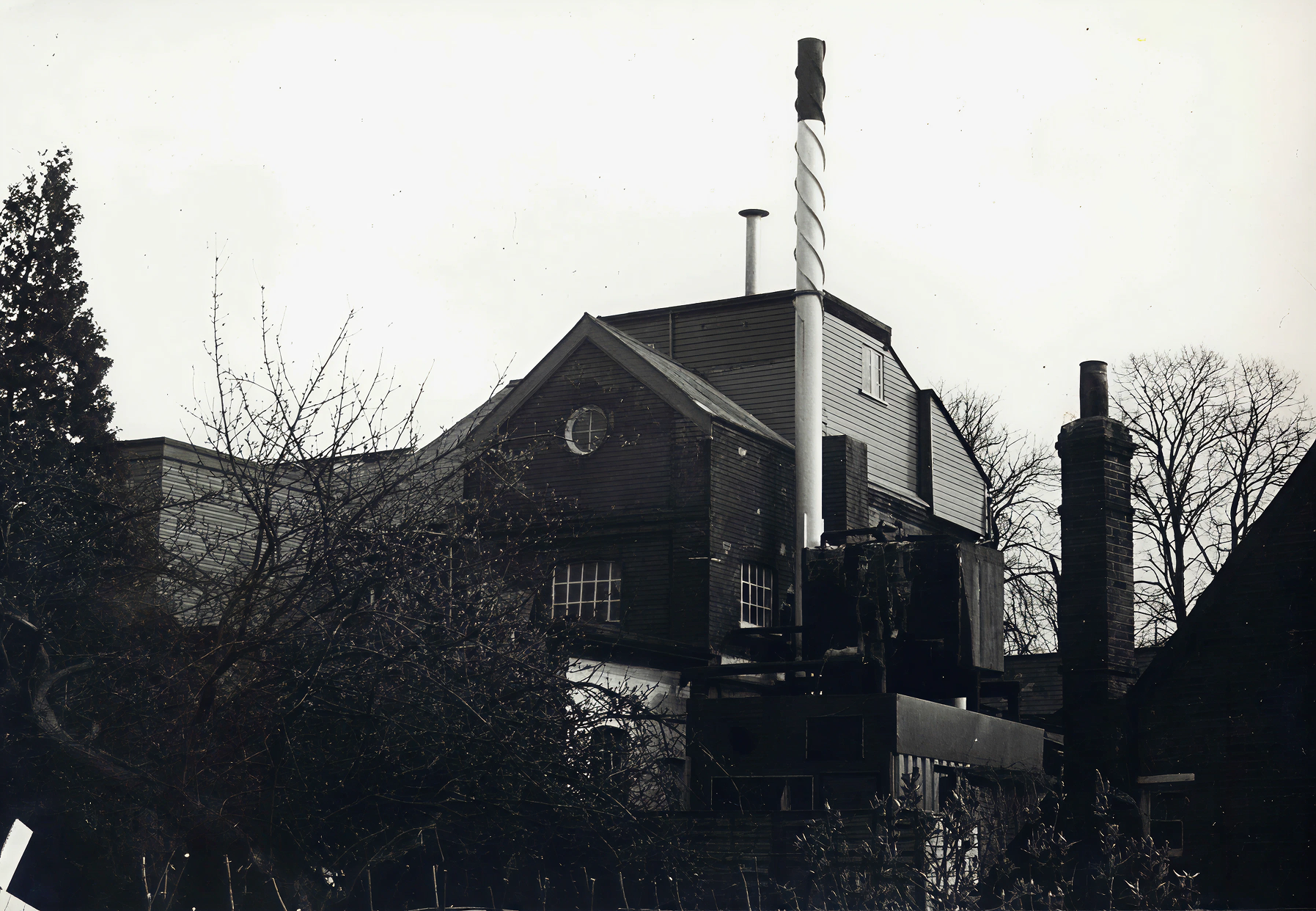
The brewhouse from a neighbouring garden, some time in the mid-twentieth century. The spiral flue was still standing when the brewery closed.
More than you might think. The brewery buildings still stand across the road, converted to houses in the late 1990s and now called The Old Brewery.
The brewhouse is the two-storey block with the curved-headed iron windows and the sack hoist over its door. Beside it are the malthouse, the coopers' shop, part brick and part weatherboard, and the small rendered lodge.
On the corner of this pub, at the junction, sits a large lump of Hertfordshire puddingstone: flint pebbles set in silica some 56 million years ago. The county has used the stuff for boundary markers and good-luck charms for centuries. And inside, photographs of the brewery in its working days hang in the bar.
Andrew and Max, who took over the pub in 2026, are talking to local brewers about bringing BBA back. If they manage it, the first pint will be poured sixty yards from where BBA was brewed for 127 years.
What's left to see
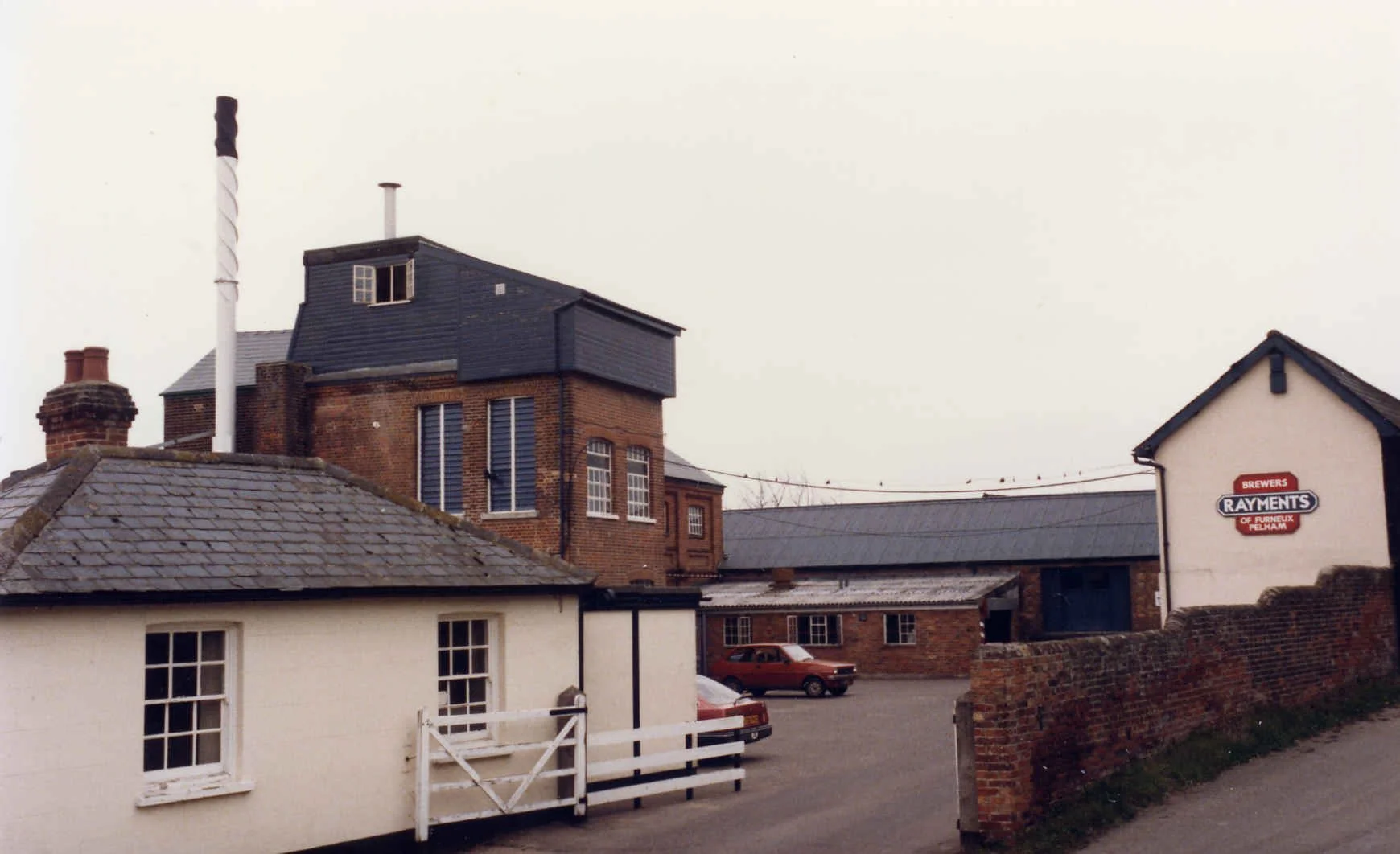
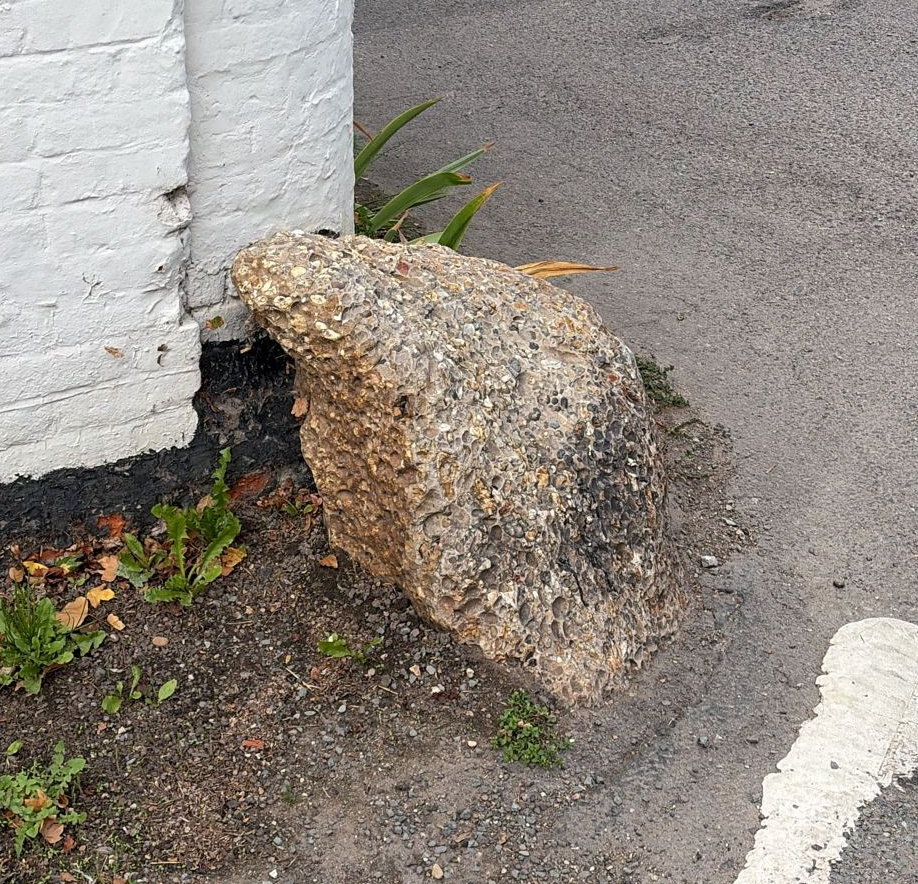
The brewery from Violets Lane in the 1980s, its own name on the gable. Inset: the puddingstone on the pub's corner, photographed this year.